How to Style Vintage Mirrors: 5 Approaches That Actually Work
Vintage mirrors do more than reflect — they add depth, light, and character. Five practical approaches to placing and styling mirrors in any room.
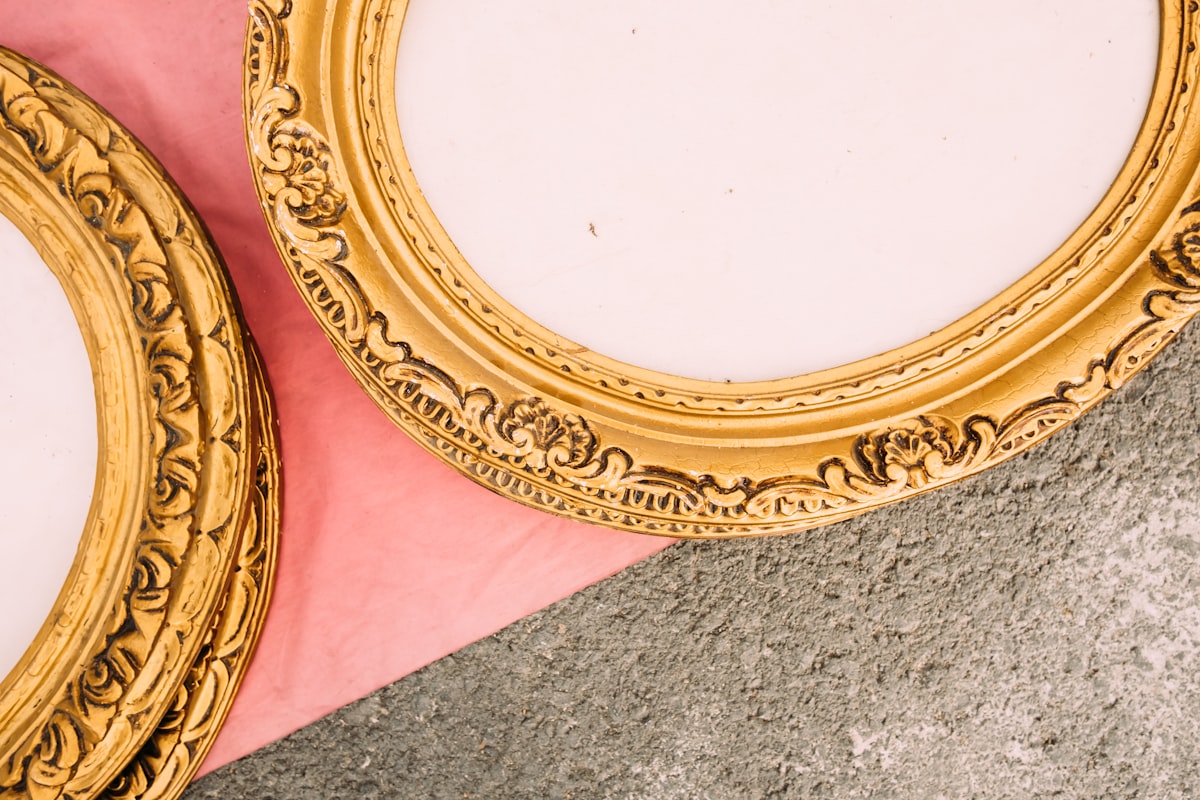
A well-placed mirror changes a room more than almost any other single object. It doubles the light, adds depth, and gives the eye somewhere interesting to land. Vintage and vintage-inspired mirrors do all of this while adding character that a plain frameless mirror cannot match.
Here are five approaches that work consistently.
1. The Lean
Full-length arched mirrors look best leaning against a wall rather than mounted. Place one in a bedroom, at the end of a hallway, or in a living room corner. The slight tilt creates a more relaxed, lived-in feel than a perfectly plumb wall mount.
The rule: the mirror should be tall enough that you can see most of yourself, and the frame should have enough visual weight to justify its position on the floor. Thin frames get lost. A substantial antiqued gold or dark wood frame anchors the piece.
2. Flanking a Focal Point
Two matching wall sconces on either side of a mirror over a console table or mantel is one of the oldest tricks in interior design, and it still works. The mirror reflects the candlelight (or LED light), and the symmetry creates a natural focal point.
This works with virtually any mirror shape — arched, rectangular, or round — as long as the sconces are proportionate. A good ratio: the sconces should sit roughly one-third to halfway up the mirror's height.
3. The Gallery Mix
Hang a mirror as part of a gallery wall arrangement. A sunburst mirror or an ornate round mirror breaks up a grid of framed prints and photographs with a different texture and dimension. The reflective surface catches the eye and prevents the arrangement from feeling flat.
Practical tip: place the mirror where it will reflect something worth seeing — a window, a plant, an interesting light fixture. A mirror reflecting a blank wall is a missed opportunity.
4. Above the Vanity
Bathroom mirrors do not have to be frameless rectangles from the hardware store. An ogee-profile mirror in distressed cream or a round mirror with an iron frame transforms a functional bathroom into a space with personality.
If your vanity lighting is overhead, a framed mirror with a slightly ornate profile catches and distributes that light more interestingly than flat glass.
5. Small Mirrors, Big Impact
You do not need a statement piece to use a mirror effectively. A small brass sunburst mirror on a narrow wall, a convex mirror above a doorway, or a pair of small round mirrors flanking a window — these smaller pieces add light and visual interest to spaces that are too small or awkward for art.
The convex mirror is particularly effective. Because it reflects a wider field of view than a flat mirror, even a 12cm mirror surface captures a surprising amount of the room.
Start Here
Our mirror collection includes arched floor mirrors, ogee wall mirrors, and brass sunburst mirrors — each designed to add old-world character and practical light to any space.